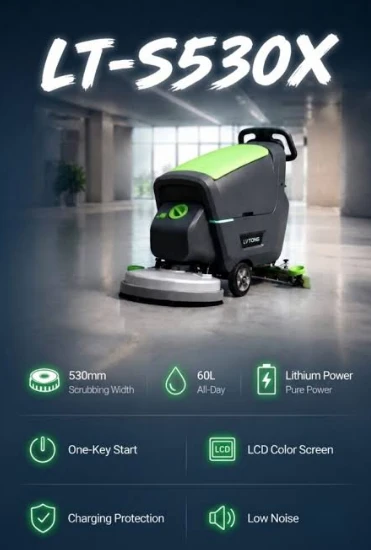
A proper floor scrubber battery maintenance routine can extend battery service life by 30%–50%, reduce unexpected downtime, and improve charging efficiency. Regular inspection of battery terminals, electrolyte levels, charging cycles, and storage conditions helps operators maintain stable machine performance. Choosing the correct charger and following manufacturer charging guidelines can prevent premature battery replacement and keep cleaning equipment available for daily operations.
Floor scrubbers depend on battery systems to provide power for motors, vacuum systems, pumps, and control units. In commercial cleaning environments, batteries often represent one of the largest maintenance expenses after brushes and squeegees. A typical industrial floor scrubber battery pack operates between 24V and 48V, with capacities commonly ranging from 100Ah to more than 1000Ah. The way batteries are charged and maintained directly affects operating hours, replacement frequency, and equipment reliability.
“A battery used correctly can often reach 80% or more of its rated cycle life, while poor charging habits may reduce service life by more than 40%.”
Different battery types require different maintenance methods. Flooded lead-acid batteries remain widely used because of their lower purchase cost, while AGM, gel, and lithium-ion batteries are selected for applications requiring less maintenance or longer operating periods.
| Battery Type | Average Service Life | Common Maintenance |
|---|---|---|
| Flooded Lead-Acid | 2–5 years | Water level checks, terminal cleaning, ventilation |
| AGM | 3–5 years | Connector inspection and correct charging |
| Gel | 3–5 years | Avoid overvoltage charging |
| Lithium-Ion | 5–10 years | Battery management system inspection |
Flooded lead-acid batteries need regular electrolyte checks because water loss can reduce plate coverage and lower available capacity. In many commercial applications, operators inspect water levels every 20–50 operating hours. Only distilled water should be added because minerals in tap water may accumulate inside the battery and reduce performance over time.
Battery terminals should also be checked because corrosion increases electrical resistance. When resistance rises, the battery may provide lower voltage under load, causing shorter cleaning time and reduced motor performance. Cleaning terminals monthly and checking cable connections can prevent many common electrical issues.
Battery condition is strongly related to charging habits. Most industrial chargers use three charging stages: bulk, absorption, and float. During bulk charging, the charger restores most of the lost capacity. The absorption stage reduces current as the battery approaches full charge, while float charging maintains the battery without excessive charging.
Using the correct charger is important because charging specifications vary between battery technologies. A charger designed for flooded lead-acid batteries may damage lithium-ion batteries, while insufficient charging voltage may prevent lead-acid batteries from reaching full capacity.
| Charging Practice | Recommended Approach |
|---|---|
| Charging after daily use | Recommended for most commercial operations |
| Deep discharge below 20% capacity | Avoid frequent occurrence |
| Charger compatibility | Match voltage and battery chemistry |
| Storage charging | Maintain proper charge level during long periods |
Temperature also affects battery performance. Most batteries operate efficiently between approximately 15°C and 25°C (59°F–77°F). At higher temperatures, chemical reactions accelerate and battery aging increases. At lower temperatures, available capacity decreases, and charging time becomes longer.
For example, a battery operating continuously in a 35°C (95°F) environment may experience a noticeably shorter service period compared with the same battery used under moderate conditions. Maintaining a clean, ventilated charging area helps control temperature and improves battery consistency.
A complete scrubber battery maintenance program should include daily checks, weekly inspections, and scheduled testing. The frequency depends on machine usage. A ride-on scrubber operating multiple shifts each day requires more attention than equipment used for occasional cleaning.
| Maintenance Task | Suggested Frequency |
|---|---|
| Check battery condition | Before daily operation |
| Inspect charging cables | Weekly |
| Clean terminals | Monthly |
| Test battery capacity | Every 3–6 months |
| Review charging records | Monthly |
Operators should record battery voltage, charging time, and machine runtime. These records make it easier to identify gradual performance changes. For example, if a scrubber that normally operates for 5 hours begins operating for only 3.5 hours, the battery system may require inspection before replacement is necessary.
The following practices are commonly recommended for professional scrubber battery maintenance:
“Avoid leaving batteries fully discharged for extended periods. Recharge equipment after use and store batteries according to manufacturer recommendations.”
Battery storage requires attention when machines are unused for several weeks. Lead-acid batteries naturally lose charge during storage, and leaving them discharged can cause sulfation, which reduces capacity. Lithium-ion batteries should generally be stored at a moderate charge level rather than completely full or empty.
Charging areas should remain dry and clean because dust and moisture can affect electrical connections. Facilities using flooded lead-acid batteries should provide ventilation because charging can release hydrogen gas. According to industrial safety recommendations, charging stations should be separated from ignition sources and maintained with adequate airflow.
Battery replacement decisions should consider operating conditions rather than only purchase price. A battery with a higher initial cost may provide better long-term performance if it offers more charging cycles and requires fewer service interruptions. For cleaning fleets with dozens of machines, extending average battery life by one year can reduce replacement frequency and maintenance labor.
Lithium-ion batteries have become more common in high-use cleaning equipment because they provide longer cycle life and faster charging capability. Many lithium systems can complete thousands of charge cycles when properly managed. Their built-in battery management systems monitor voltage, temperature, and cell balance to protect the battery during operation.
However, lithium-ion batteries still require correct chargers and suitable operating conditions. The protection system can prevent many electrical problems, but it cannot correct physical damage, incorrect installation, or unsuitable storage environments.
Fleet operators can also improve battery management by reviewing equipment data. Modern cleaning machines may record charging cycles, operating hours, and battery status information. Reviewing this information every month allows maintenance teams to plan service before battery performance declines significantly.
“A consistent charging routine, regular inspection schedule, and correct storage method can extend battery service life while keeping floor scrubbers ready for daily cleaning tasks.”
Proper care of batteries and charging systems helps maintain cleaning efficiency, reduce equipment interruptions, and control maintenance costs. With regular checks and suitable charging practices, commercial floor scrubbers can provide stable performance throughout their expected service period.